Walls
Open Flashing Where Levels Meet
Wall flashing at each step works loose, and water from the upper roof runs straight behind it into the shop.

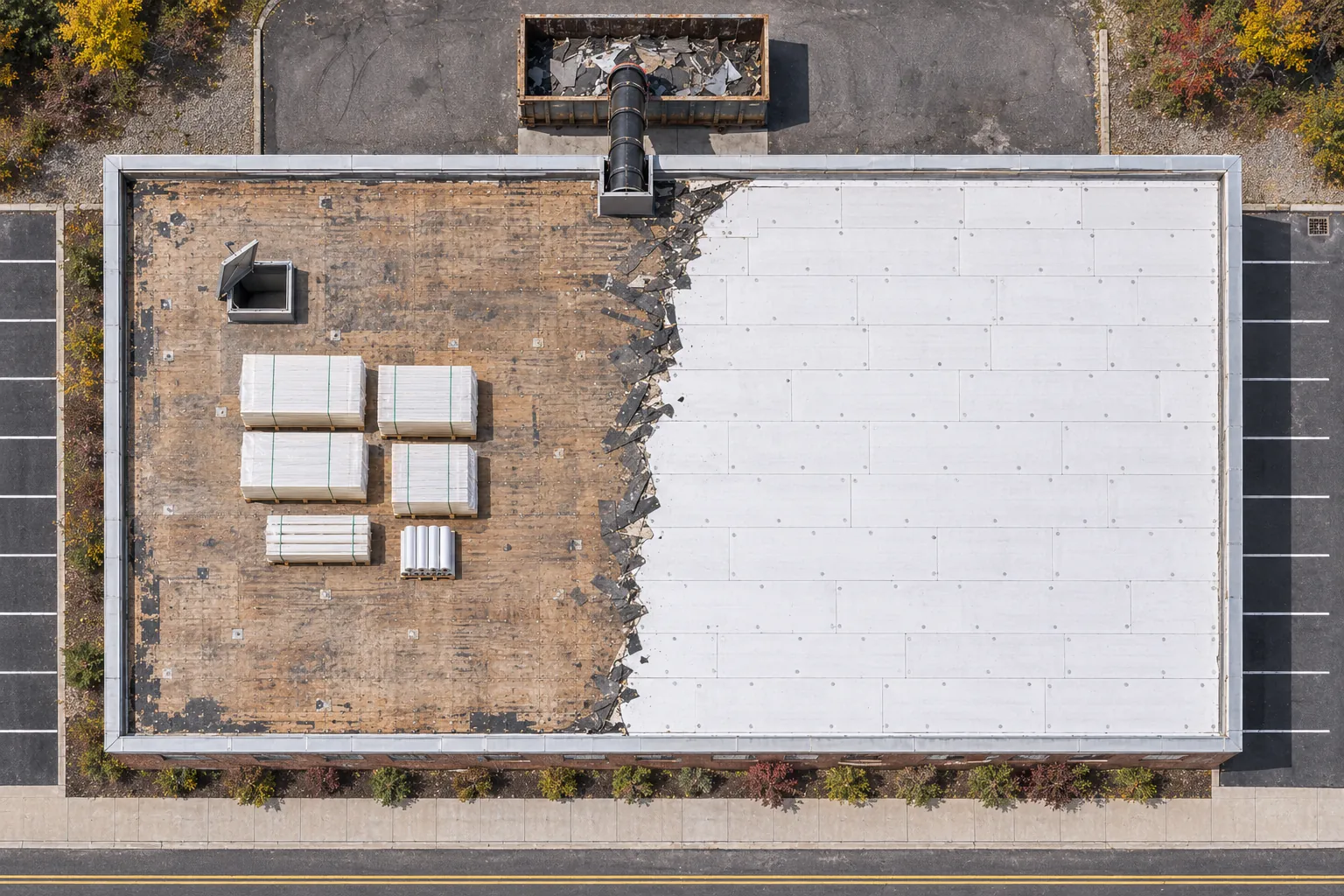
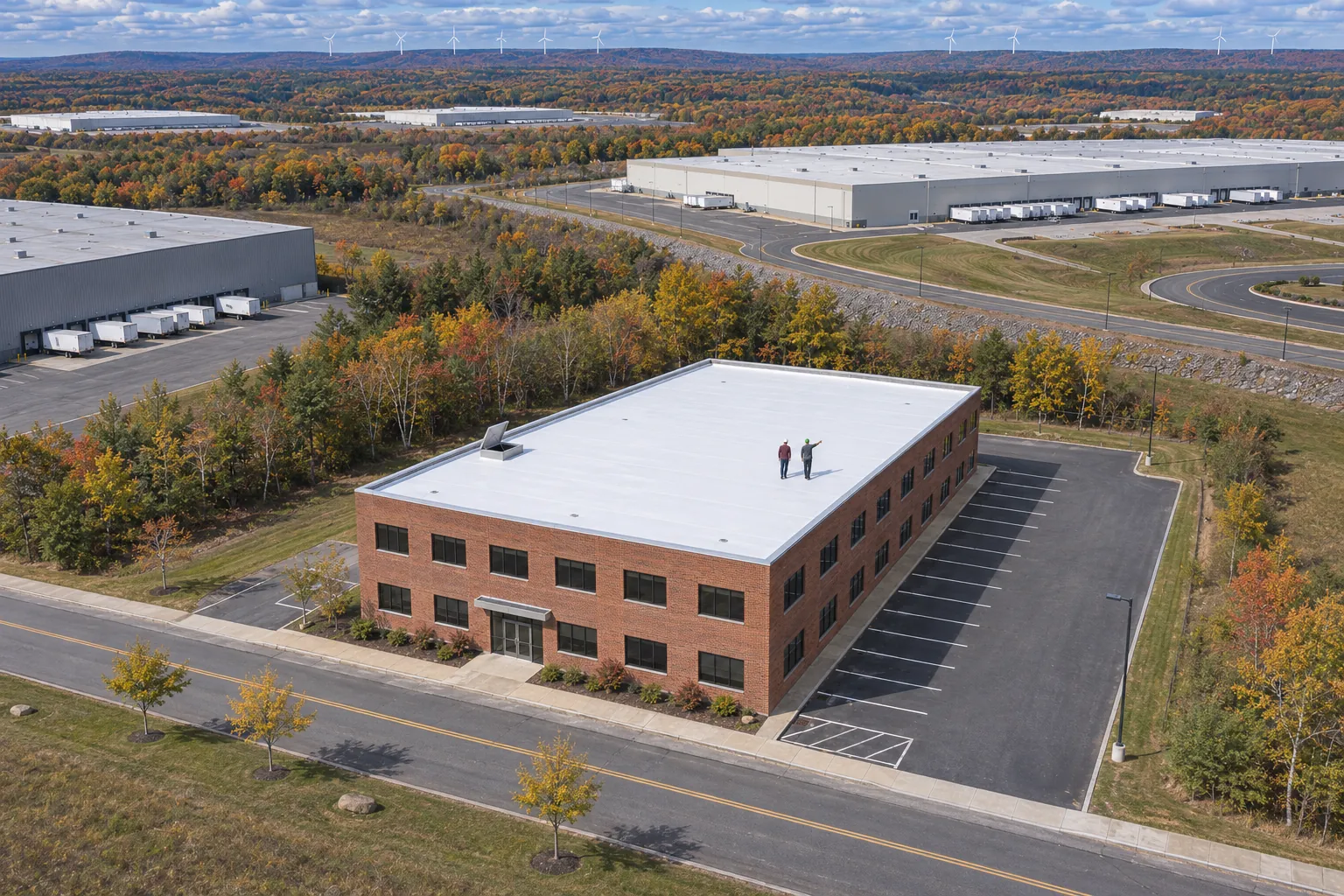
As a Tamaqua commercial roofing contractor, we replace roofs on shops with several levels, sealing the walls, transitions, and outlets where runoff from above lands.
Tamaqua commercial roofing on a stepped building starts at the lowest roof. It takes the water from every section above and joins several parts of the building.
We inspect the walls between levels, the lower-roof outlets, and how crews get from one roof to the next before choosing the work order.
A small lower roof can need more detail than the big one above it. Splash zones under downspouts, wall flashing on two or three sides, and tight outlets all meet in a few square feet.
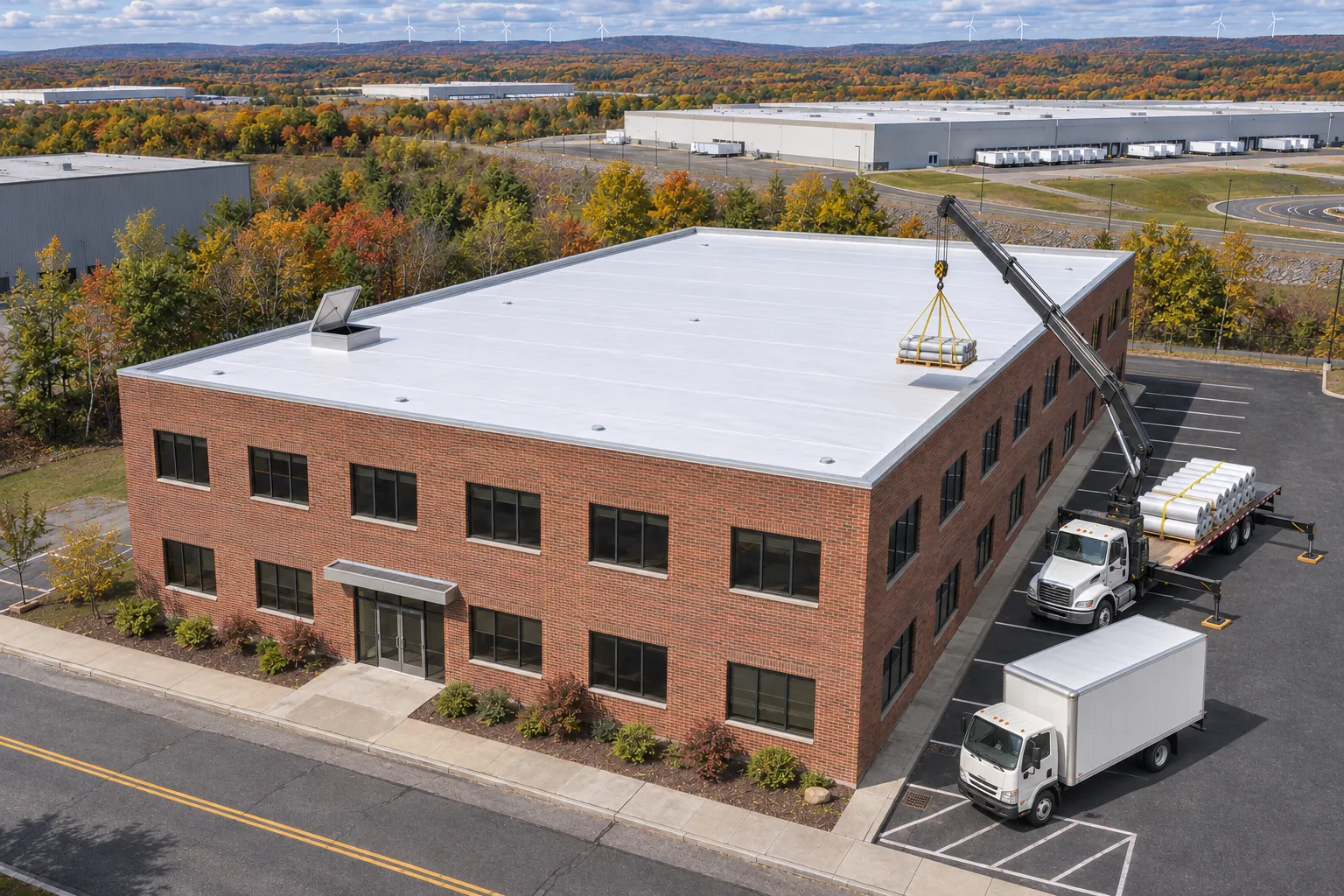
Stepped roofs leak where levels meet. These four conditions show up most.
Wall flashing at each step works loose, and water from the upper roof runs straight behind it into the shop.
A small drain sized for one roof cannot keep up with water from three, so it backs up against the wall.
Water pouring from upper levels erodes the lower roof surface in one spot until the membrane wears through.
Snow slides and drifts off higher sections onto the lower roof, packing ice against the wall flashing.
Condensate lines and exhaust from upper-level units drip onto the roof below and wear a path in the membrane.
Pipes set tight against a step wall leave no room to flash, and water collects in the corner around them.
Fixing the transitions helps everyone who owns, maintains, or works in a stepped building.
Different levels of one building can carry different systems. These are the options.
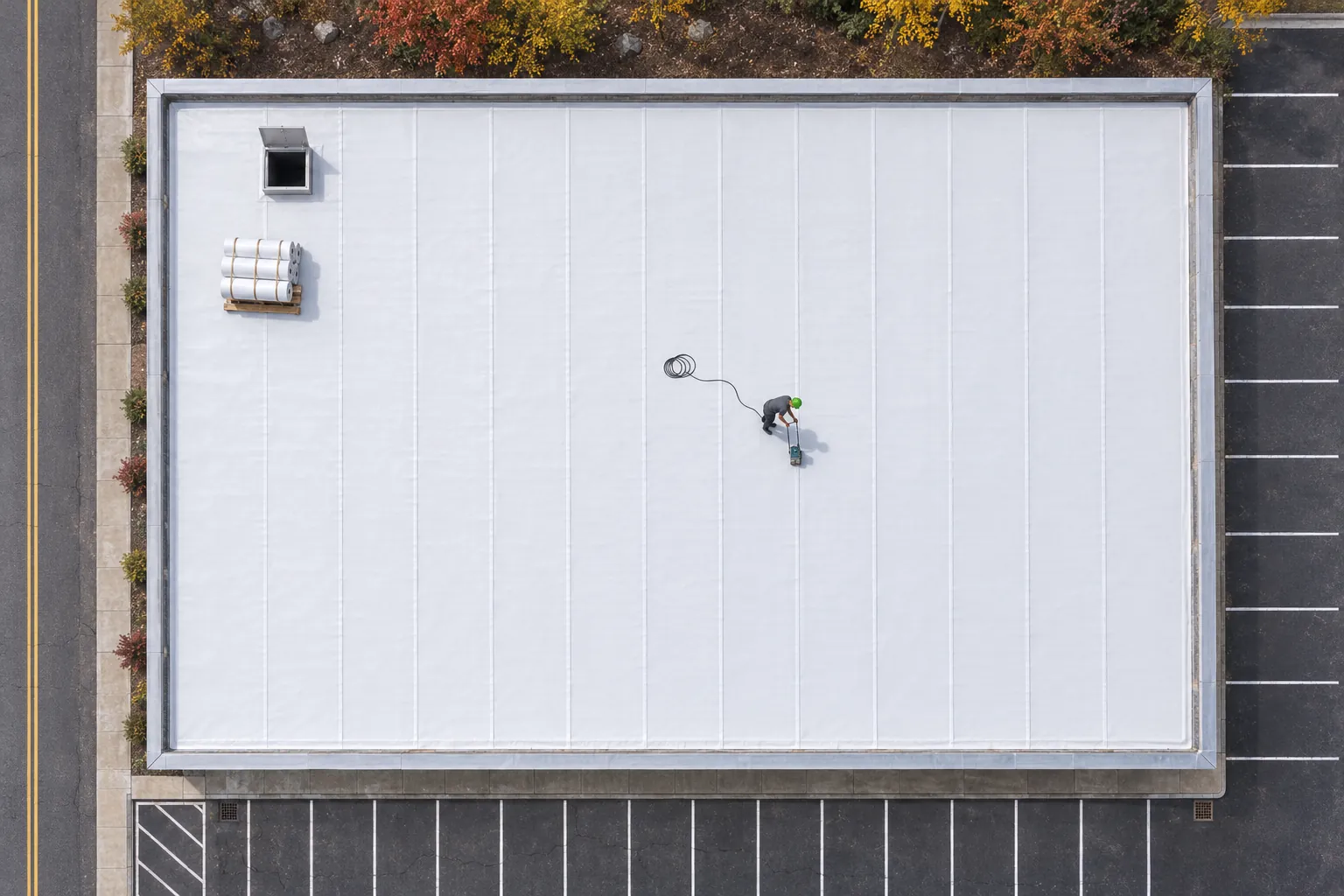
Welded membrane that handles tight wall flashing on low roofs between taller sections.
TPO Roofing in Hazleton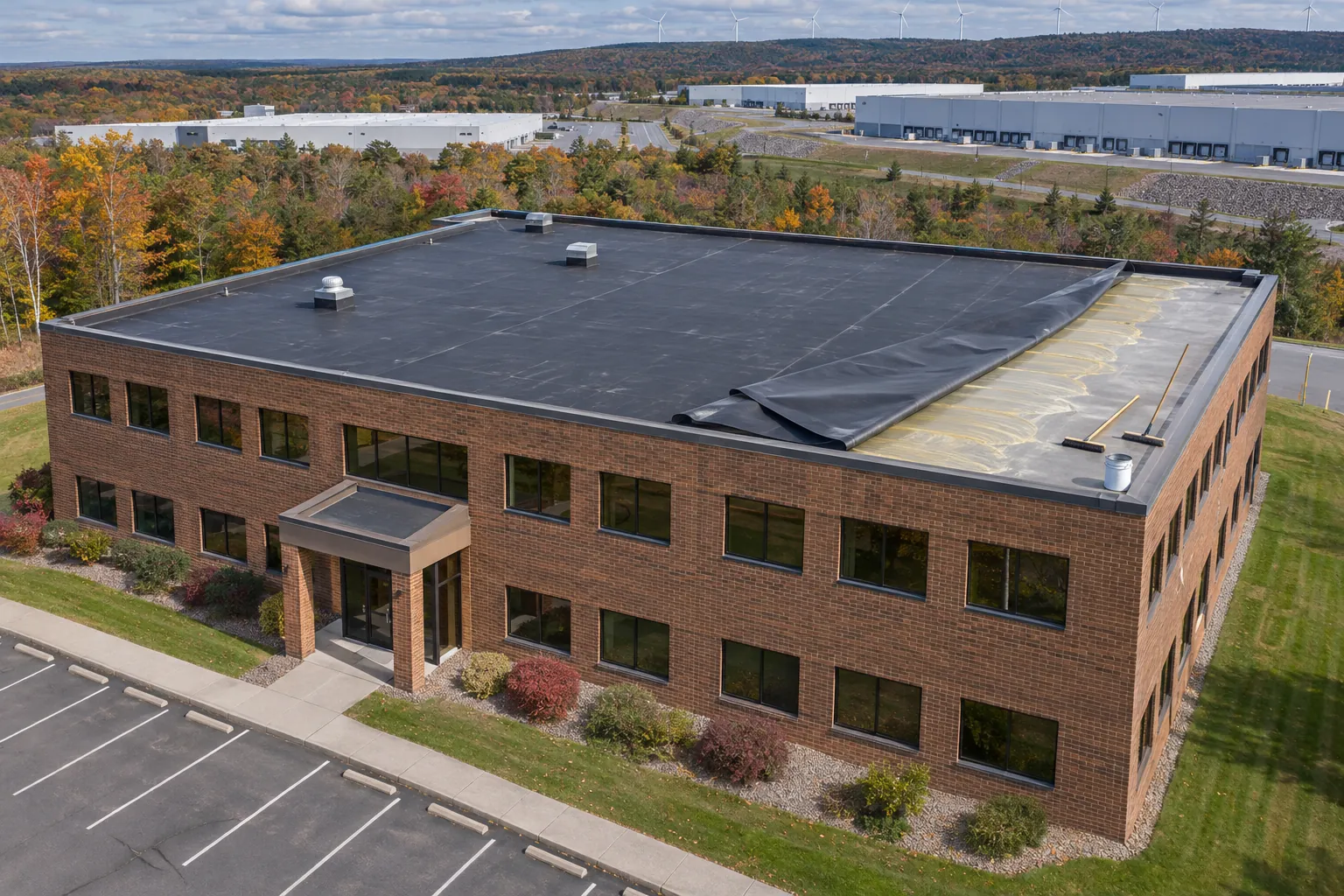
Flexible rubber sheets for lower roofs with irregular walls and several corners to flash.
EPDM Roofing in Hazleton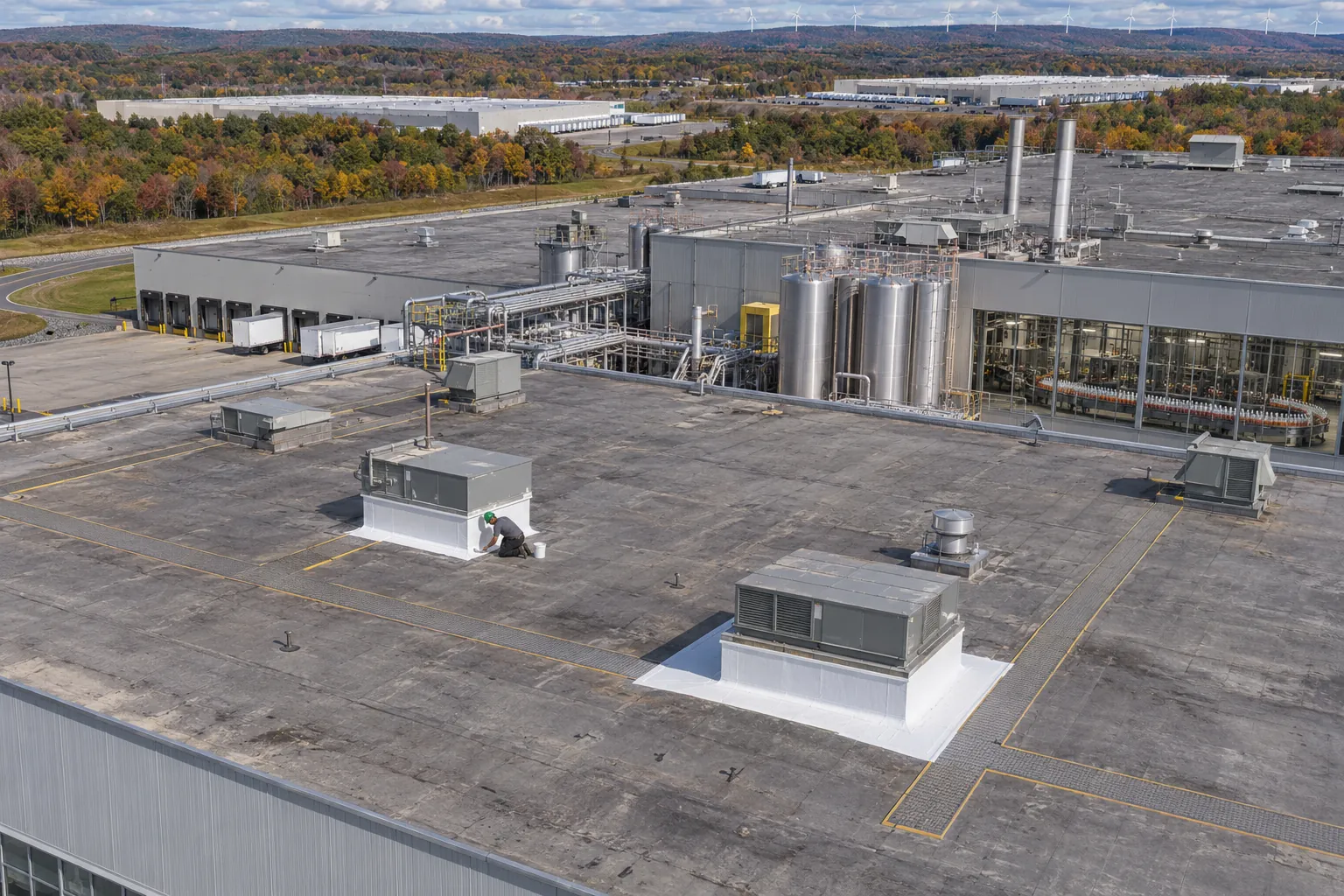
Plans for larger shops where rooftop units sit on one level and drain onto another.
Industrial Roofing in Hazleton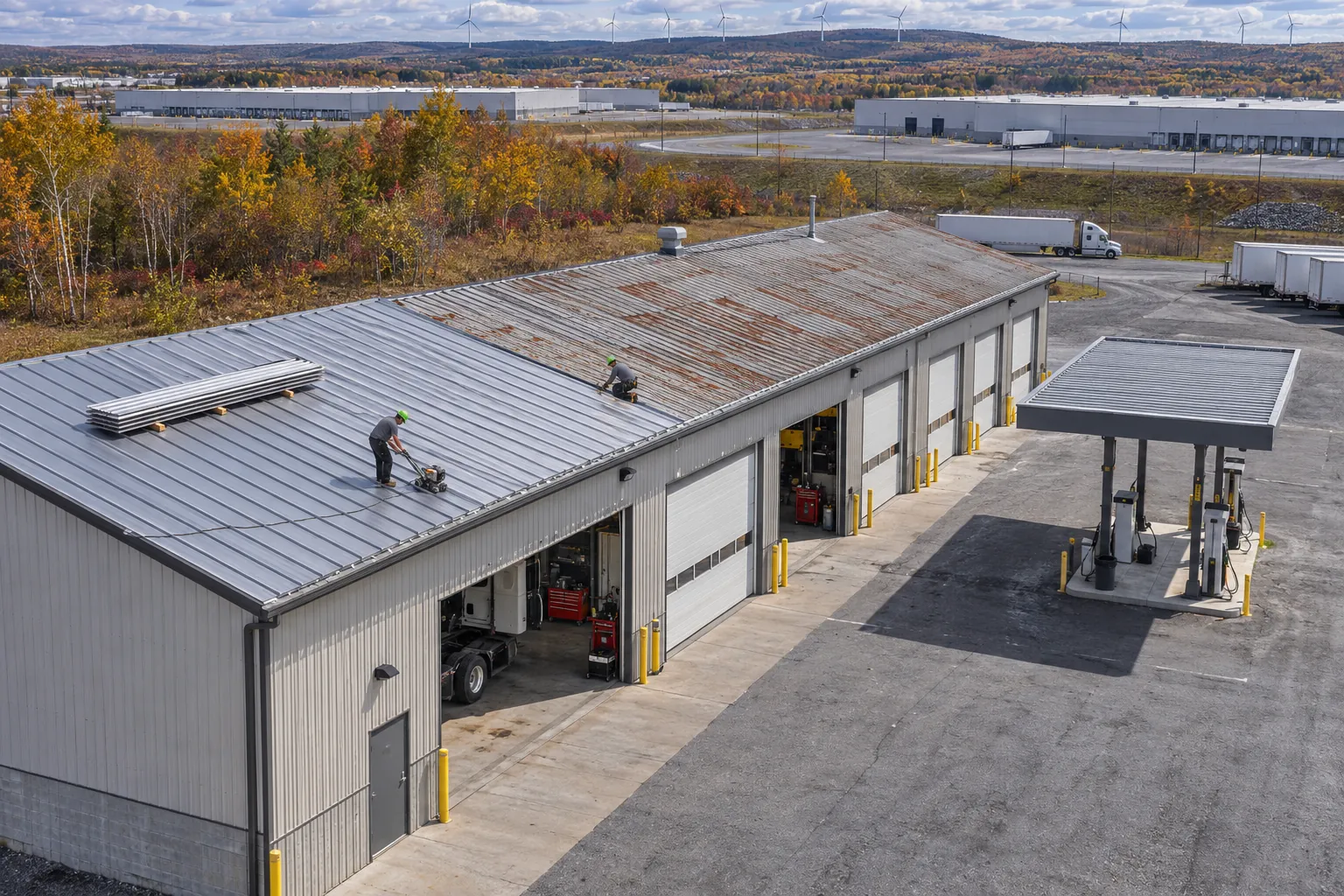
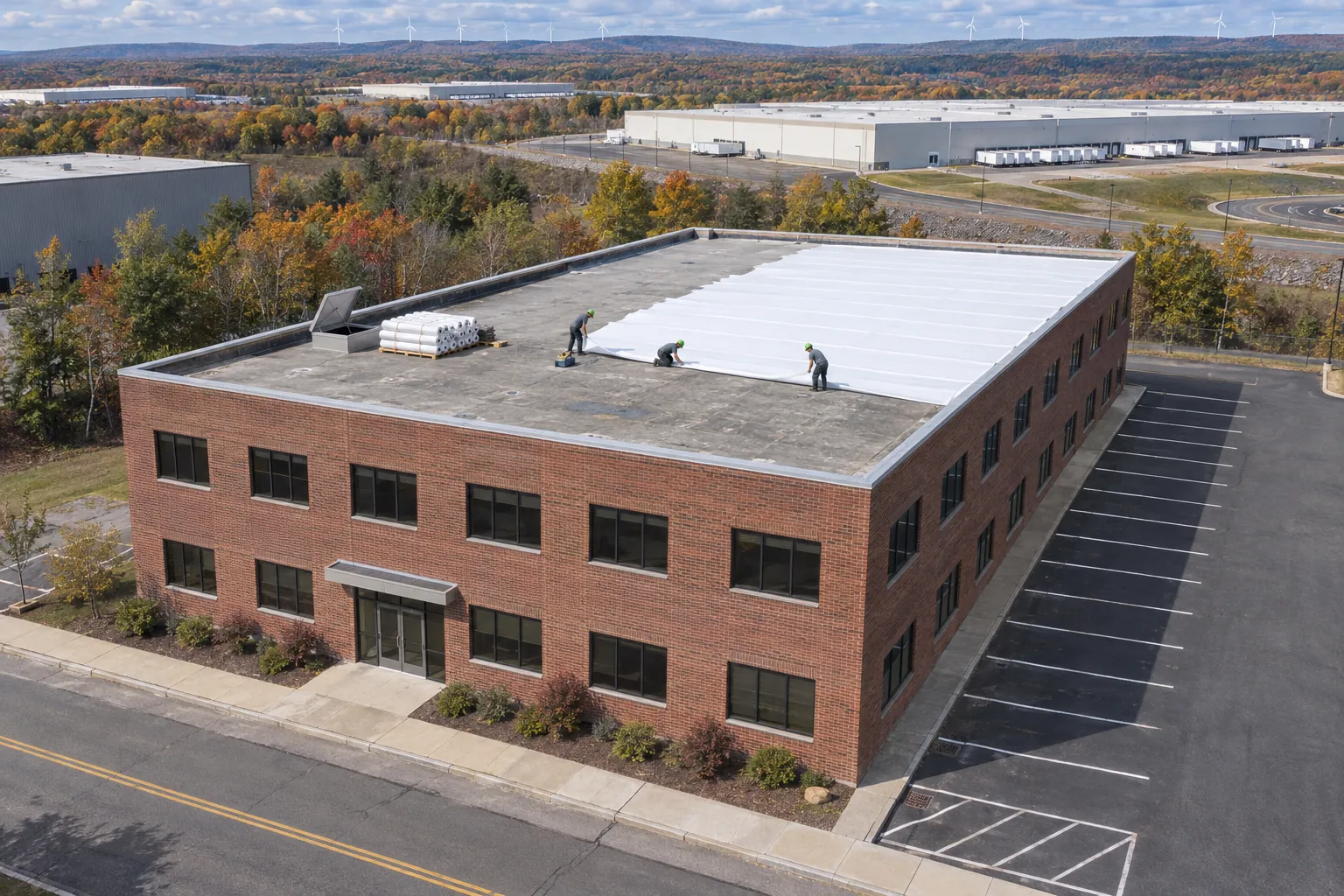
Steel panels for upper pitched sections, with trim that sends water away from the roof below.
Commercial Metal Roofing in HazletonCall and describe the wall that stays wet. We will inspect the step flashing, the lower outlet, and the downspout above it.
Six steps for a roof with more than one level, worked from the bottom up.
Each roof, wall, and outlet is inspected, and we note where water from one level lands on the next.
Outlets and scuppers on lower roofs are checked against the area draining to them, and enlarged where they fall short.
Work usually starts low and moves up, so every new flashing laps correctly under the section above it.
Wall flashing, counterflashing, and splash protection go in at every step, tied into the new membrane.
Drains are flushed and transitions are inspected in order from top to bottom before closeout.
Ladders and walk paths between levels are noted for future inspections, so service crews stop climbing across the most fragile transitions.
We take commercial roofing work in these towns as well. Elsewhere? Call us or send us a message.
Stepped roofs, cost, and finding a contractor nearby.
Question about your own roof?
Call UsEvery transition and the water arriving from higher sections. We inspect walls, lower-roof outlets, and access between levels before choosing the order, since a small lower roof often needs heavy detailing.
Yes, and small stepped roofs are common work for us. Size matters less than the number of walls, outlets, and levels the water crosses. We walk each level before pricing, since two small roofs can need very different amounts of flashing.
The number of transitions, wall height, outlet changes, and access between levels drive the price more than total roof area. We price each level after inspecting it. Outlet changes on lower roofs and safe ladder access between levels appear as separate lines.
Storefronts, offices, and shops in town are part of our area. Narrow access and shared walls are planned before the crew arrives. Sidewalk protection and early starts help where shops open onto the street.
Water and snow from above land on it, often in the same spots. Downspout splash and drifting ice wear the surface and stress wall flashing faster than on the upper sections. Splash pads and redirected downspouts slow that wear once the new roof is on.
It can, when the upper levels are in good shape and their downspouts can be redirected or protected. The new lower roof still has to flash correctly up each wall and under the upper roof edge, so those transitions are rebuilt even if the upper membrane stays.
Tell us how many roof levels the building has and where it leaks. We will inspect every step and plan the work from the bottom up.