Curbs
Curbs Too Short for New Insulation
Thicker insulation raises the roof surface, and old curbs end up too low for flashing to turn up and seal.

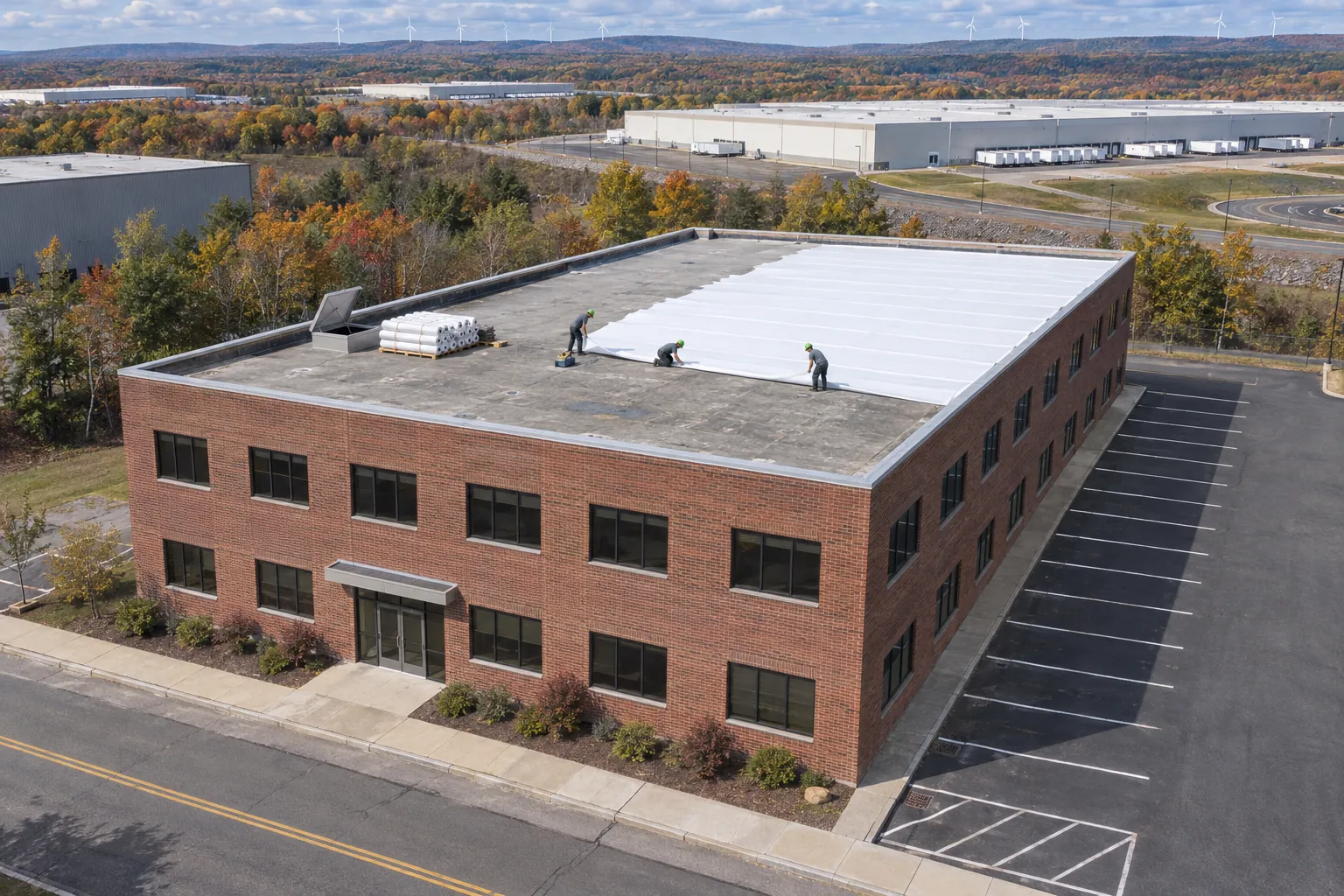
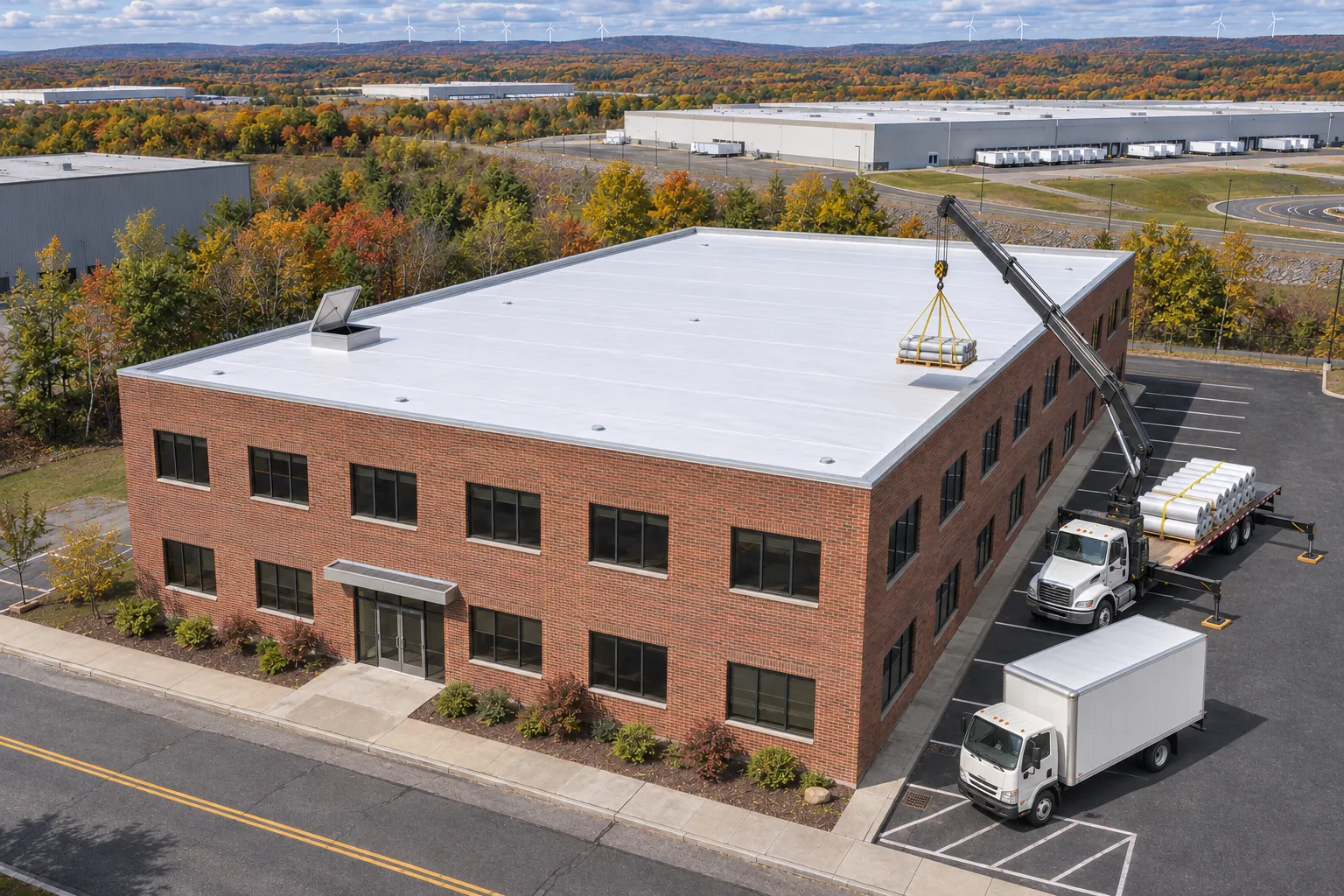
As a Berwick commercial roofing contractor, we roof bottling plants and industrial buildings in step with the equipment crews who lift and reset rooftop machinery.
Berwick commercial roofing on a plant often lines up with an equipment change. Shutdowns, crane access, and roof work need one agreed order.
When units come off the roof, their curbs and flashing sit exposed. We plan how those openings are covered, and which crew works where, before the crane arrives.
Equipment crews and roofers agree on a sequence, so new roofing is never under a load being swung or set down. Finished areas get protection boards wherever machinery crosses.
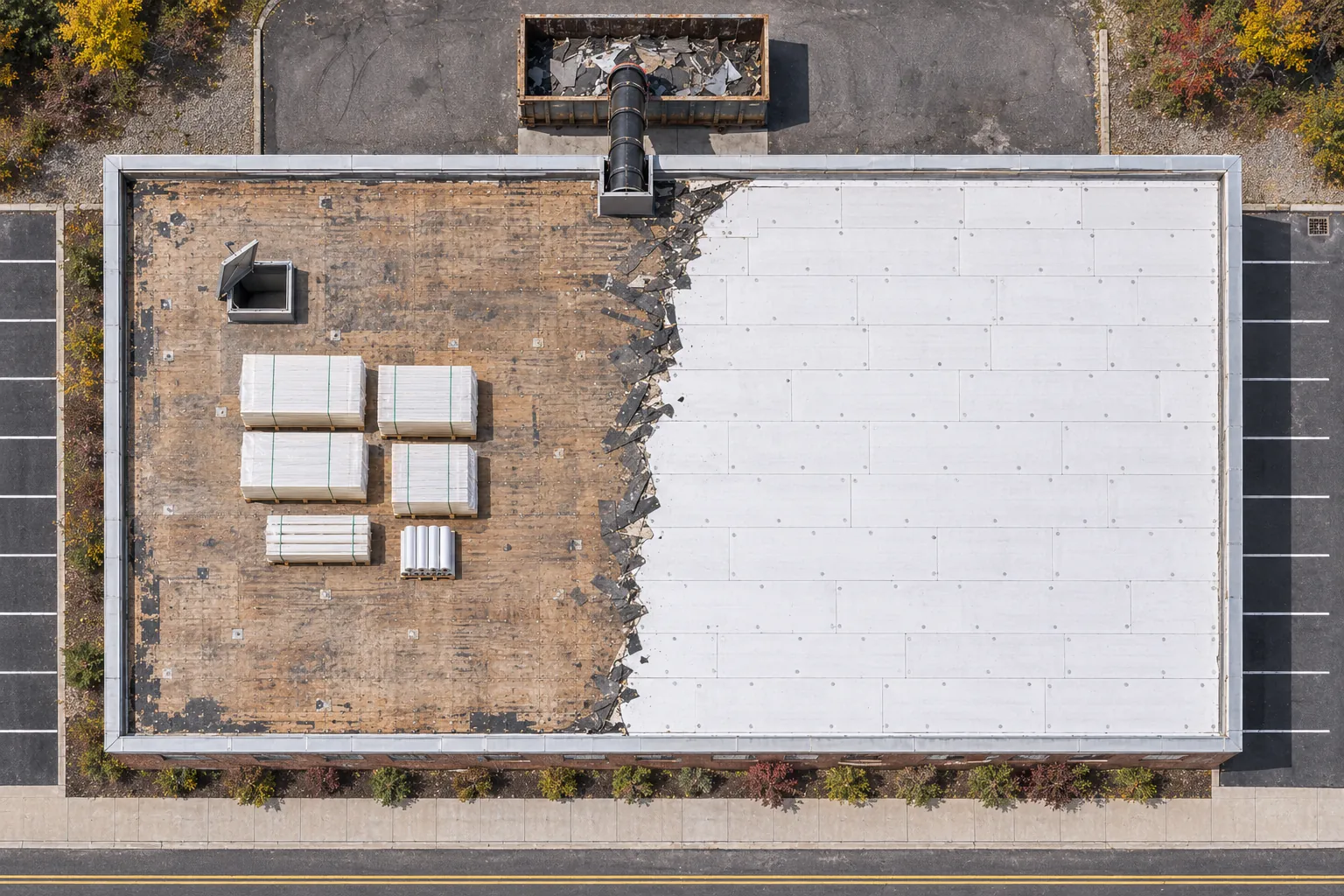
Equipment-heavy roofs show the same wear patterns. These four come up on plant roofs we inspect.
Thicker insulation raises the roof surface, and old curbs end up too low for flashing to turn up and seal.
Removed equipment leaves abandoned curbs and pipe holes that were capped with patches instead of being closed into the deck.
Rigging and service carts crease and puncture membrane along the same paths every time equipment moves.
Steam and process exhaust leave residue that ages the membrane faster around each outlet.
Units and supports set near drains slow runoff, and water then sits where technicians stand during service.
Melt from warm equipment refreezes around unit bases and curbs, lifting flashing a little more each cold snap.
An equipment-aware roof plan pays off for the plant owner, maintenance, and the floor crew.
Plant roofs often combine more than one system. These are the ones we install.
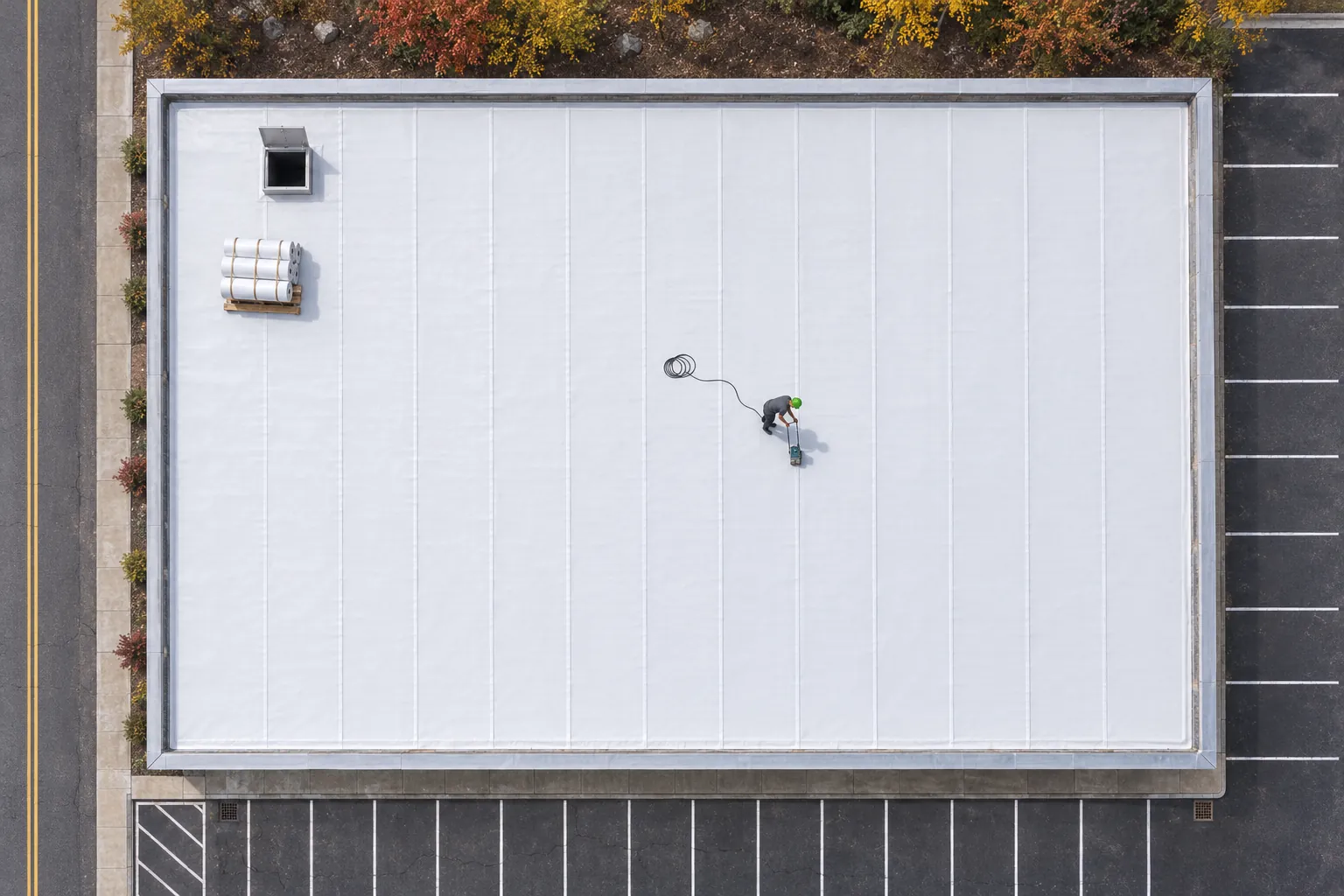
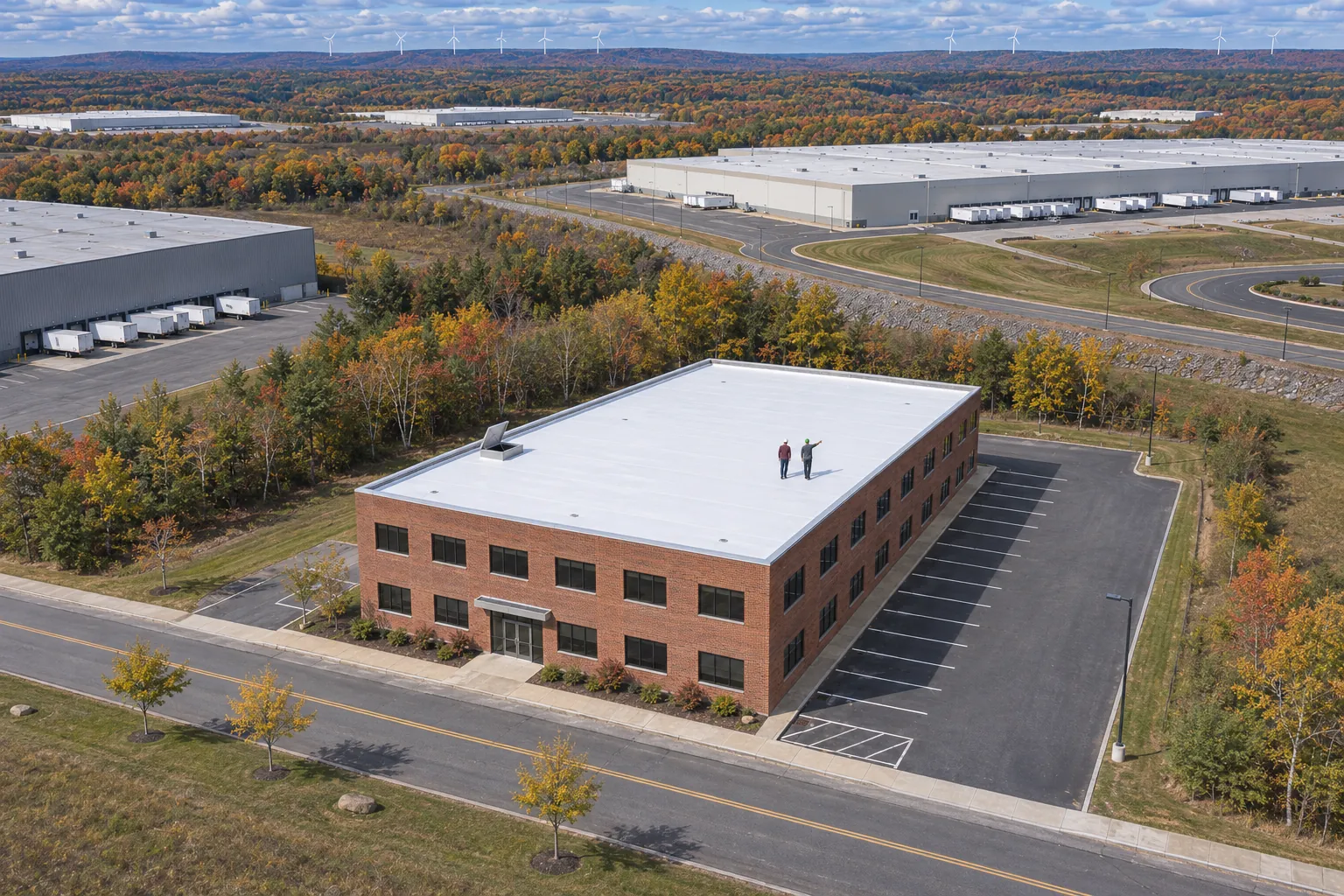
Welded membrane with heat-fused curb flashing, a common choice under heavy rooftop units.
TPO Roofing in Hazleton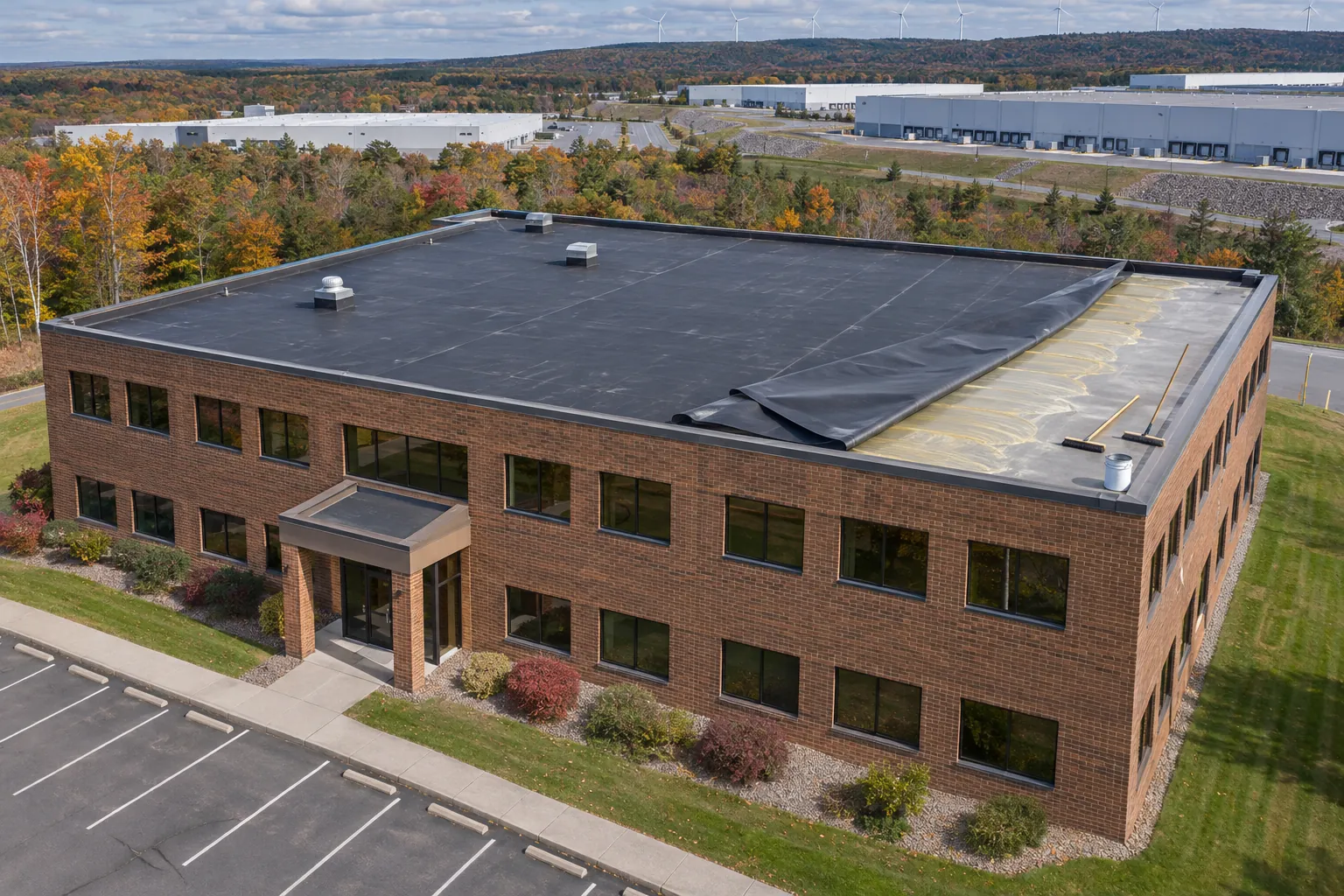
Rubber sheets for plant areas where flexible membrane and simpler field repairs are preferred.
EPDM Roofing in Hazleton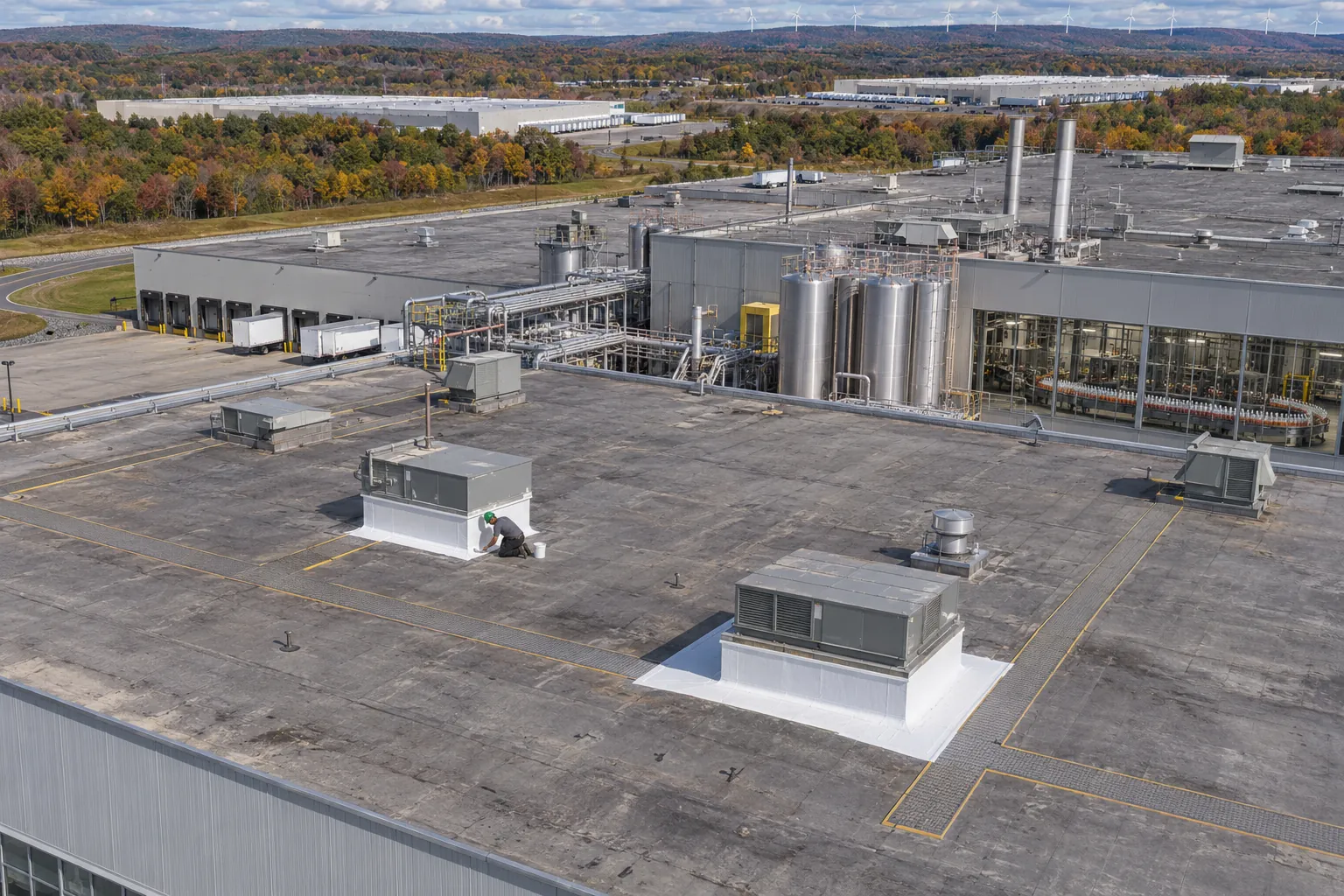
The full plant plan: curbs, supports, walkways, exhaust zones, and section order.
Industrial Roofing in Hazleton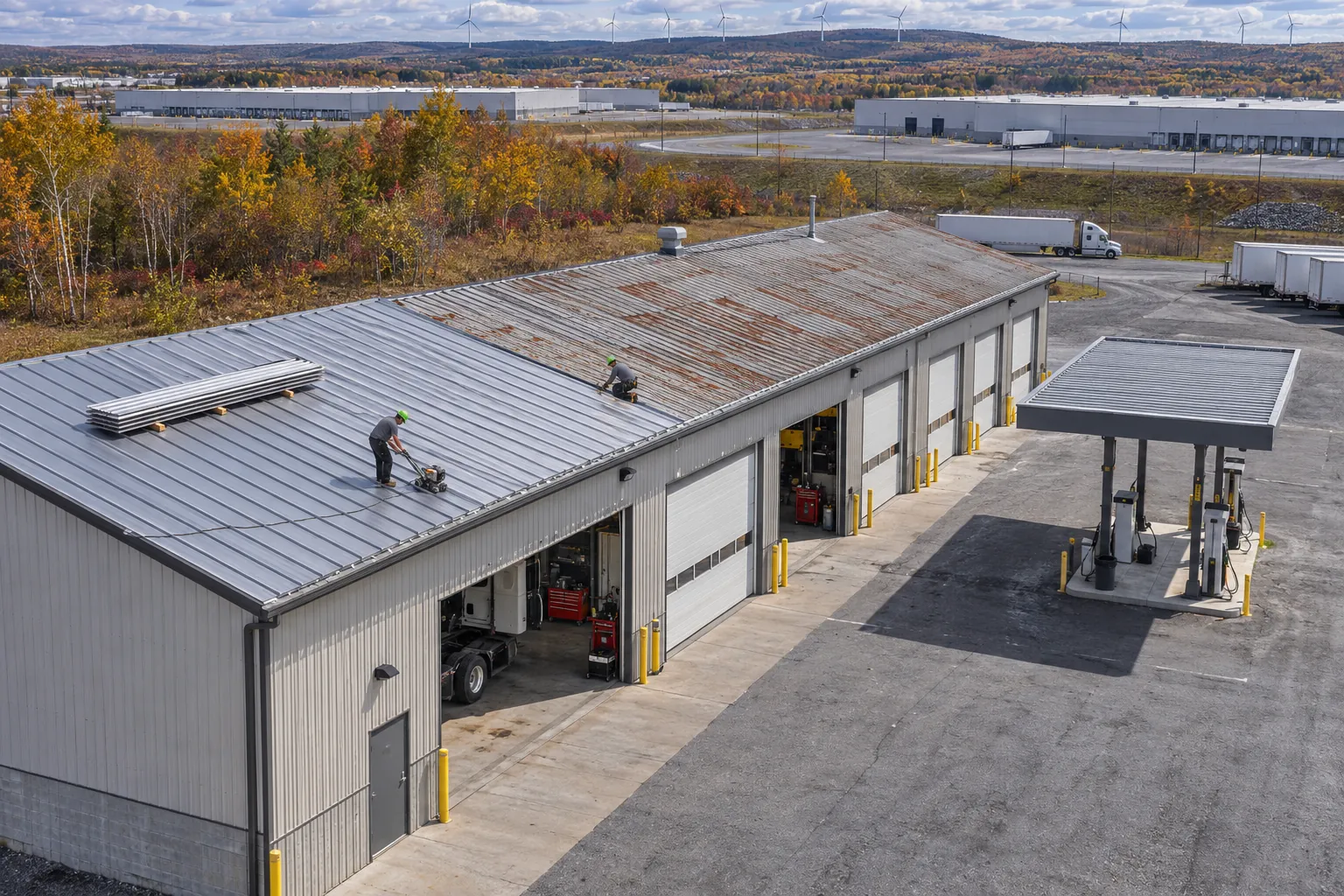
Steel panels for pitched warehouse wings, loading canopies, and outbuildings on the plant lot.
Commercial Metal Roofing in HazletonCall before the crane is booked. We will look at the curbs and flashing that will be exposed and plan the roof work around the lift.
Six steps line up the roofers, the equipment crew, and the plant.
Which units come off, which get replaced, and where the crane sets up all shape the roof plan from the start.
Each curb, support, and pipe opening is measured against the new roof height, and abandoned openings are marked for closure.
Shutdown days, lift order, and roof sections are set in one schedule that the plant, roofers, and equipment crew all share.
New or raised curbs go in while units are off, then membrane and flashing are finished before the equipment returns.
Boards cover finished roofing along crane paths, units are set back, and every curb gets a final check.
Every new curb, support, and closed opening is photographed and listed so the next equipment change starts with accurate roof information.
These towns are in our area too. Outside them? Call us or send us a message.
Equipment lifts, cost, and getting a plant roof inspected.
Question about your own roof?
Call UsCoordinate the shutdown, lift access, and the roof work that follows. We identify the curbs and flashing that will be exposed and plan their protection, and the equipment crew and roofers agree on a sequence so finished roofing is not damaged during the move.
Call or send a message with the plant address and the equipment work planned. We walk the roof and schedule an inspection around production. Bring the equipment schedule if you have one, since lift dates shape the roof sections.
That coordination is a regular part of plant roofing for us. We share a schedule with your mechanical contractor so curbs, flashing, and lifts happen in the right order. We also join the lift planning meeting when your mechanical contractor sets one up.
Curb rebuilds, abandoned openings, crane days, shutdown limits, and wet insulation near equipment add the most. The roof area itself is only part of the price. Each item is listed separately in the scope so you can see where the cost sits.
Only when their height, size, and condition fit the new unit and the new roof. Reusing a short or rotted curb carries the old leak into the new roof. We measure each curb against the planned insulation thickness before the unit is ordered.
In most plants it can. Sections over production are scheduled around shutdowns or quiet shifts, interior protection goes under open areas, and debris moves away from intakes so the floor keeps running while the roof is replaced.
Tell us about the plant roof and any equipment changes ahead. We will inspect the curbs and deck and plan the work around your lifts.