Seams
Lifting Seam Tape
Older laps glued with liquid adhesive dry out and open. Water then sits in the lap and freezes, prying it wider each winter.
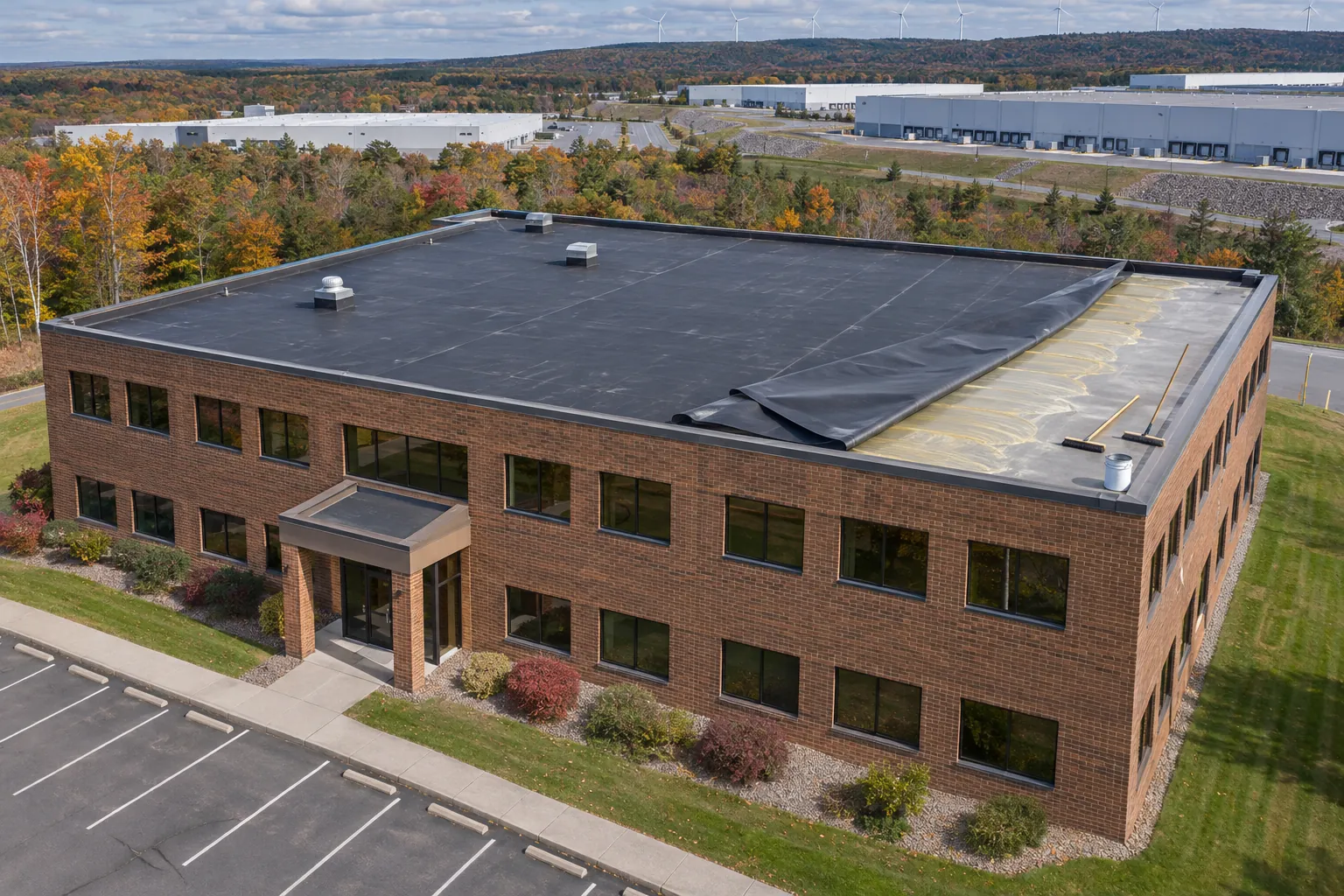
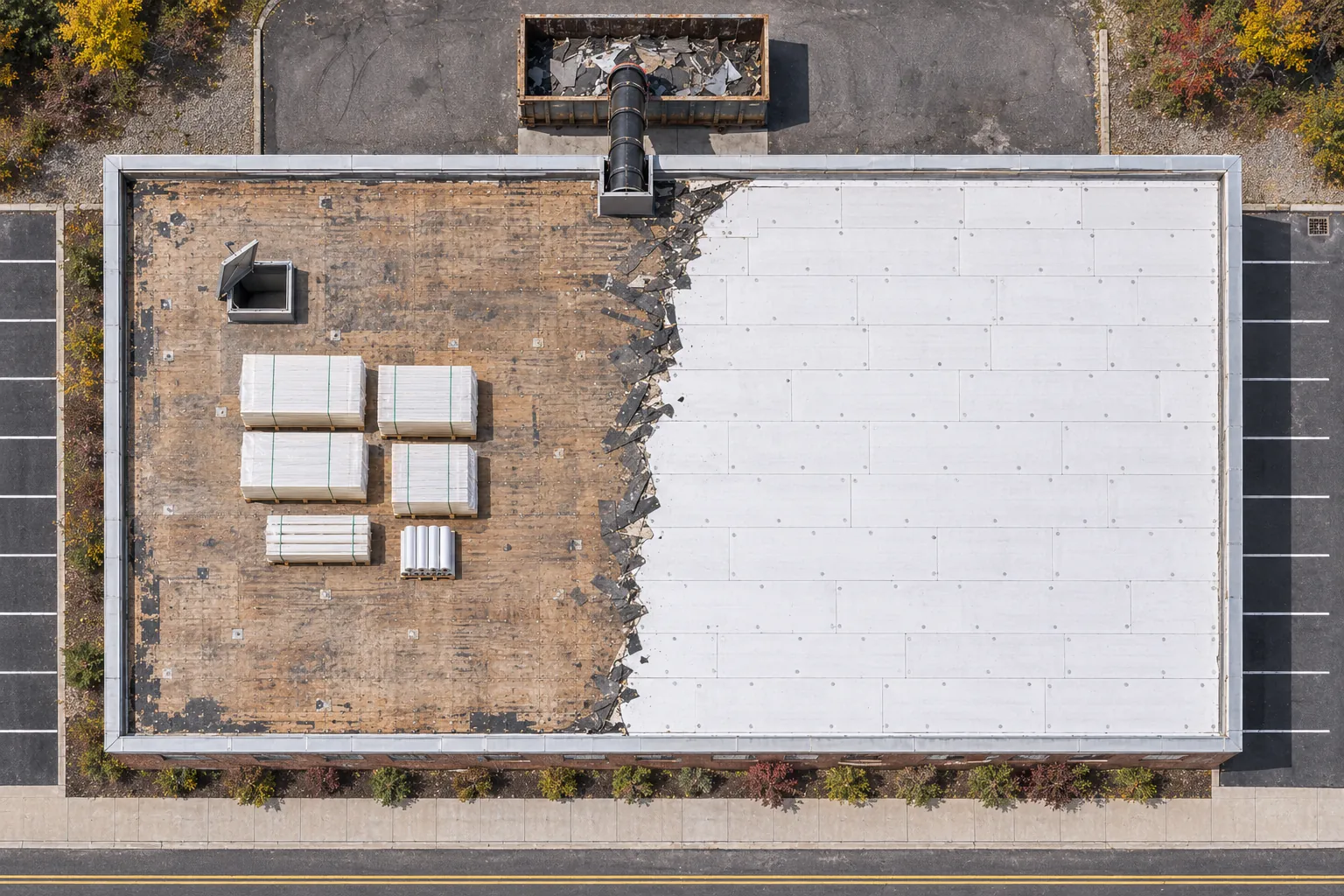
As a Hazleton EPDM roofing contractor, we install fully adhered and ballasted rubber roofs with taped seams and new parapet flashing on commercial buildings.
Hazleton EPDM roofing works on most low-slope commercial decks. Attachment and what lies under the old roof decide how it goes on.
| Your Roof | Fully Adhered EPDM | Ballasted EPDM | Another System First |
|---|---|---|---|
| Brick building with tall parapets | Usually fits | Sometimes | Rarely |
| Staff crossing the roof every week | Usually fits | Rarely | Sometimes |
| Deck rated for added stone weight | Sometimes | Usually fits | Rarely |
| Greasy or chemical exhaust on the roof | Sometimes | Sometimes | Usually fits |
| Wet layers found during the inspection | Usually fits | Sometimes | Rarely |
Wet layers come out first in every case; the levels above assume a dry base once removal is done.
Rubber roofs fail in a few familiar places. These are the ones we trace on older EPDM before planning a repair or replacement.
Older laps glued with liquid adhesive dry out and open. Water then sits in the lap and freezes, prying it wider each winter.
Shrinking sheets and tired terminations pull away from the wall, leaving a gap behind the flashing where melt runs in.
Settled insulation lets water sit near outlets, and dirt in those rings speeds wear on the rubber surface.
Pre-molded boots crack around vent pipes after years of sun and cold, letting water straight down the pipe into the ceiling.
Snowmelt refreezes at outlets and roof edges, lifting flashing and holding water against seams until the thaw finally clears it.
Some older roofs carry EPDM over a worn built-up roof, and moisture trapped between them stays hidden until the deck shows rust.
Three ways to hold the sheet down, each with its own effect on weight, traffic, and later repairs.
Adhered sheets bond to cover board and handle foot traffic well. Ballasted sheets lie loose under stone, which adds weight and hides the membrane from view.
Plates along the laps fix the sheet to a steel deck, a lighter choice for big warehouse roofs with long, open runs.
Primed laps closed with seam tape and cover strips replace the older liquid adhesives that dried out on many local roofs.
New membrane runs up the wall, under a termination bar, and into counterflashing or coping, so the edge stays closed through winter.
Rubber roofing reaches the people who pay for the roof, run the building, and work under it.
Call and describe where the wall or ceiling stays damp. We will check the membrane edge, termination, and coping above it.
Six steps take a rubber roof from inspection to finished edges.
We walk every seam and edge, test the insulation at soft spots, and check how the old sheet is held down. That tells us whether removal or a recover makes sense.
Old rubber, wet board, and any ballast stone are removed in sections that can be dried in each afternoon. Deck damage found underneath is shown to you before repair.
New insulation and cover board are set flat or tapered toward drains. Their surface has to be clean and dry before adhesive or fasteners go on.
Large rubber panels are rolled out, relaxed, and adhered or fastened. Laps are primed and taped, then rolled so the tape seats along the whole seam.
Walls, curbs, pipes, and drains get EPDM flashing tied into the field sheet. Termination bar and coping close the top edge of every parapet.
A yearly walk of seams, pipe boots, and parapet terminations catches most rubber roof problems early. We write down where to look and what a failing lap looks like.
Welded membrane, plant assemblies, and steel panels are the other options when rubber is the wrong match.
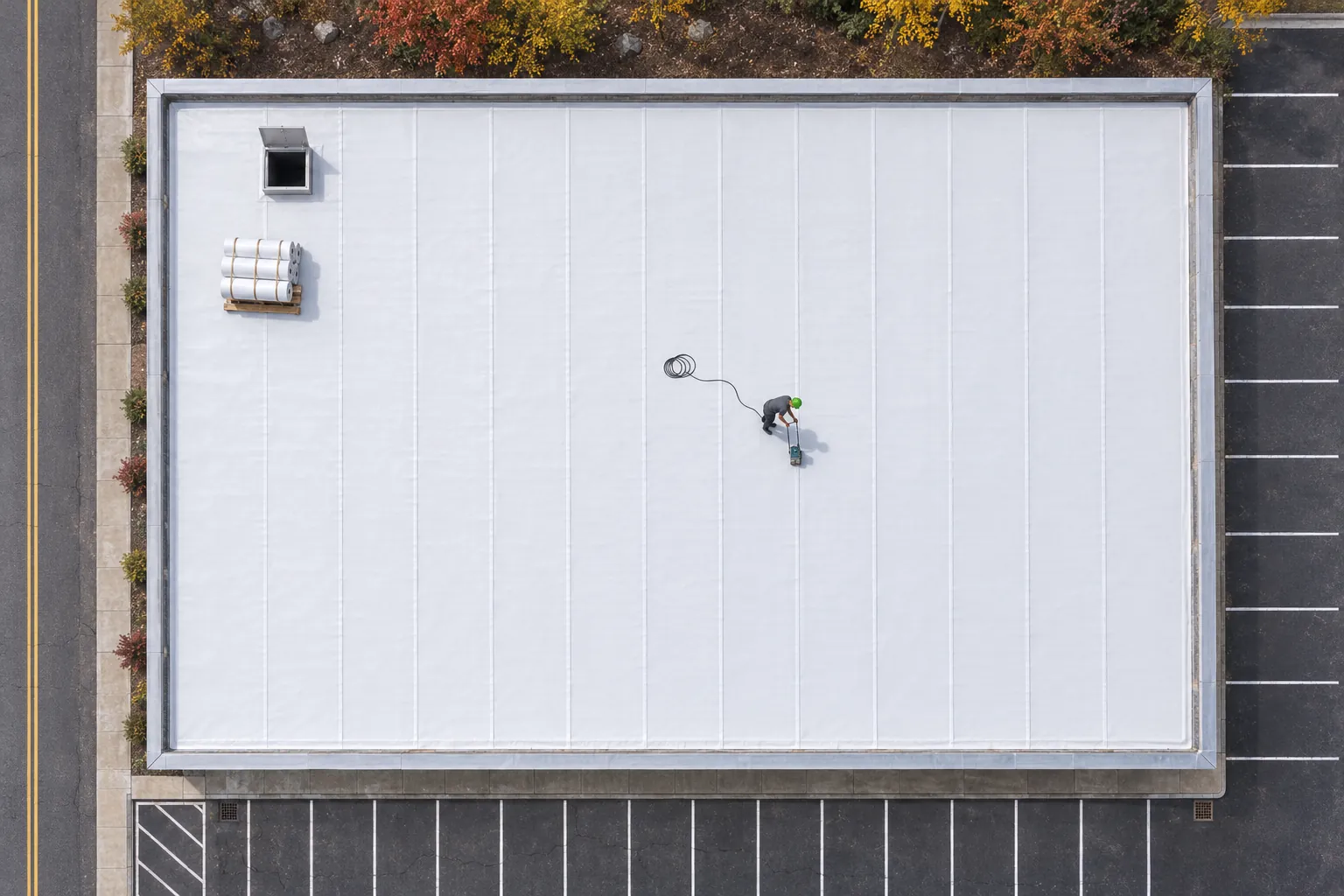
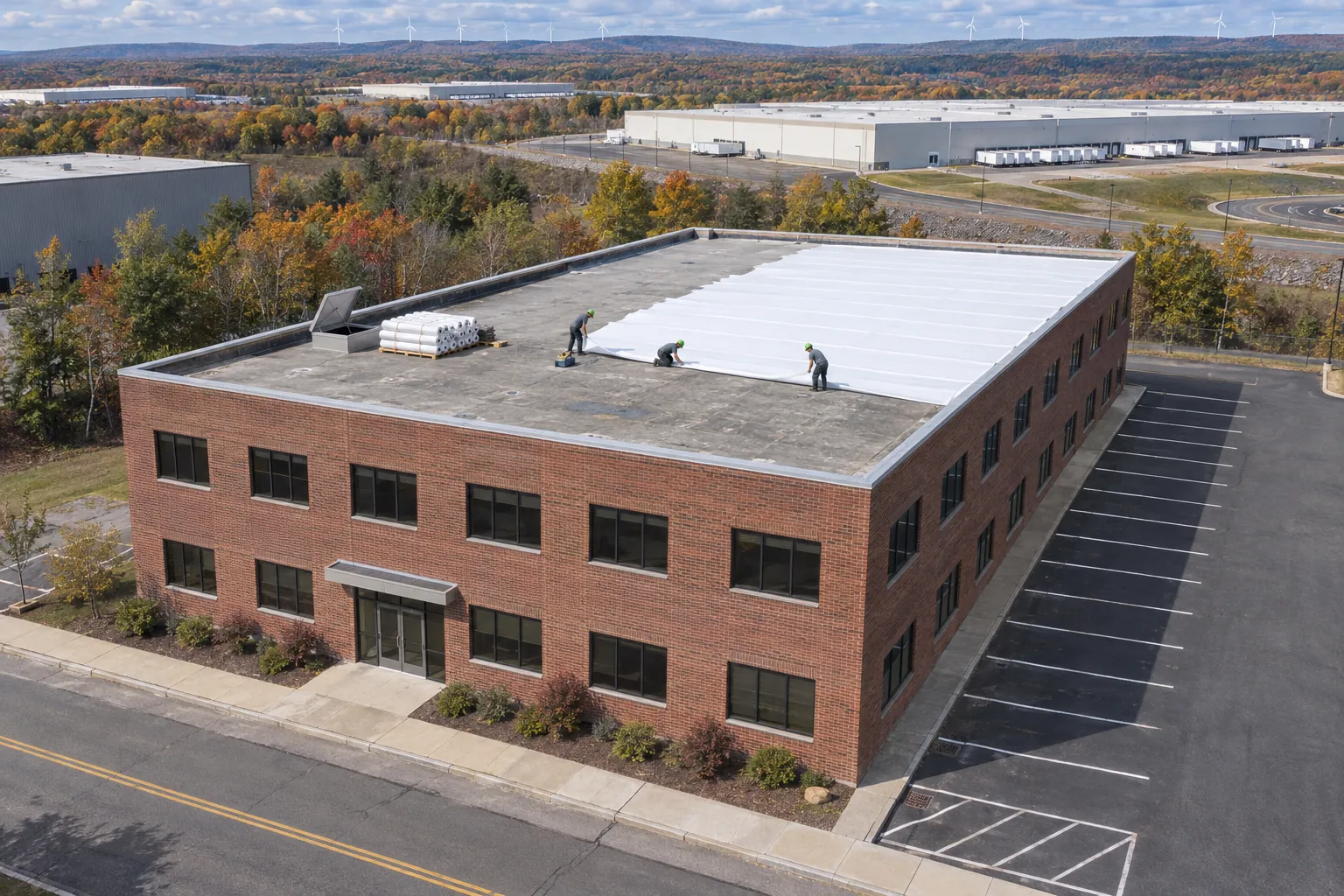
White welded membrane that suits buildings wanting a reflective surface and heat-fused seams at curbs.
TPO Roofing in Hazleton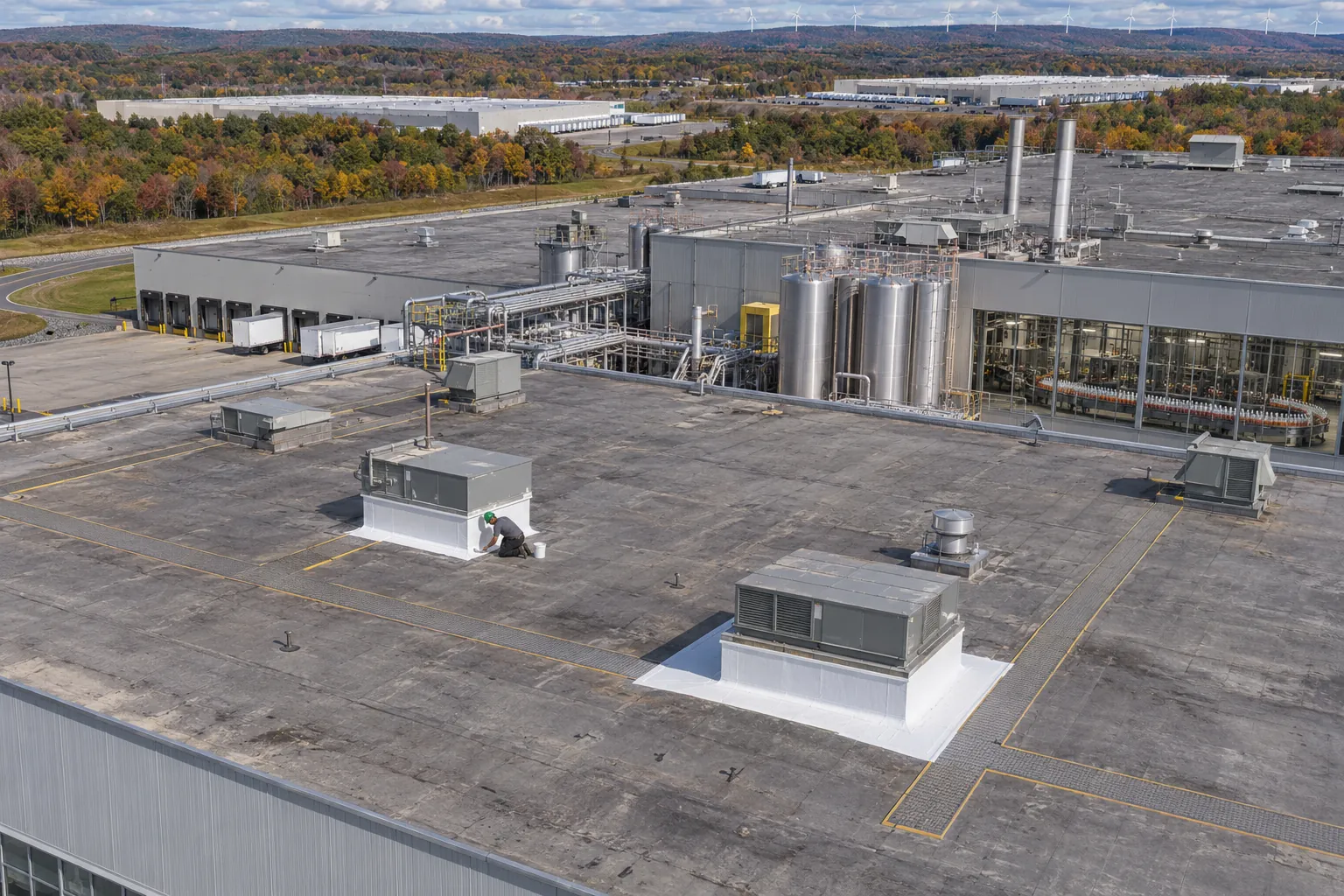
Plant roofs planned around equipment, vents, production schedules, and the routes service crews walk.
Industrial Roofing in Hazleton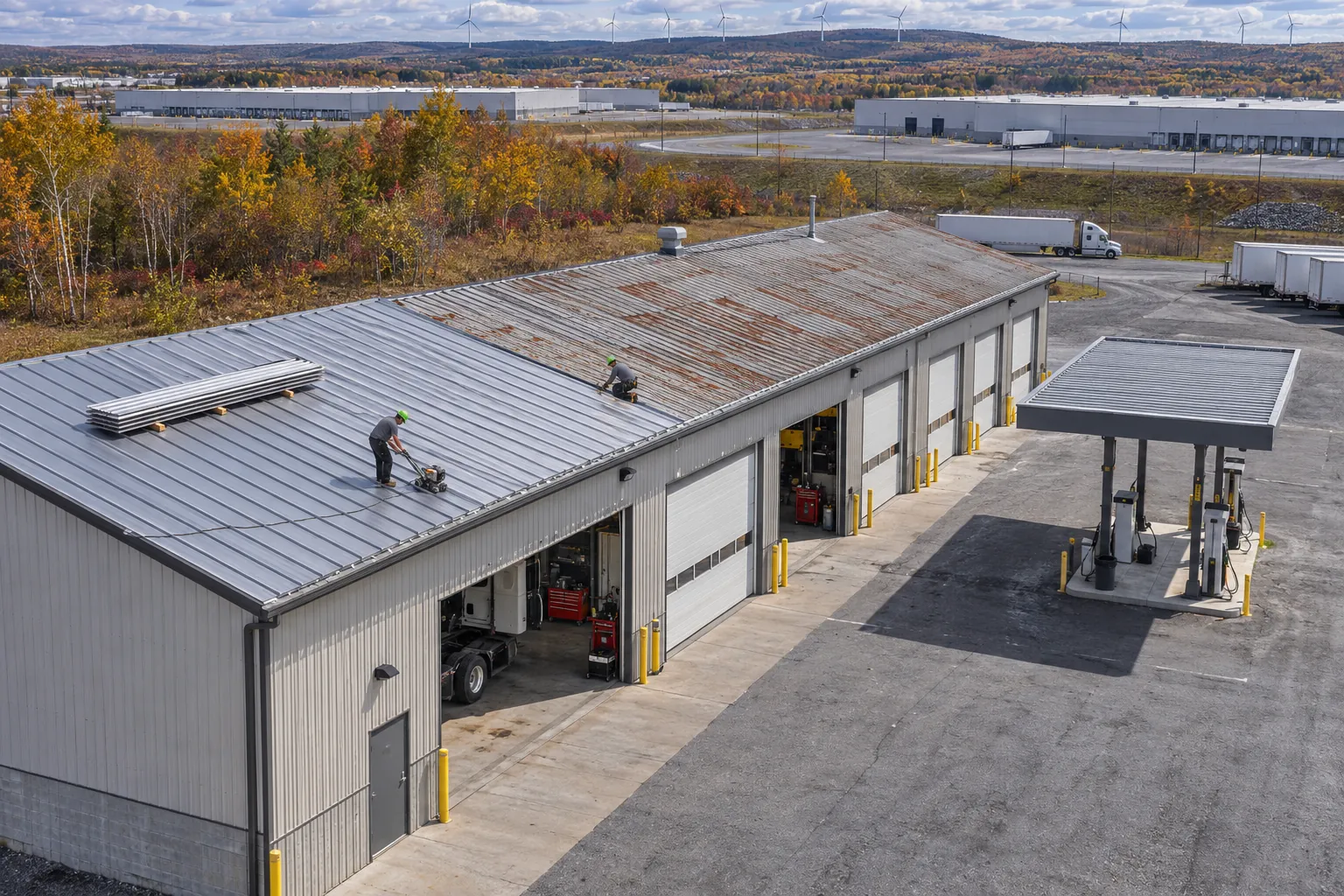
Standing-seam and ribbed panels for steel shops, with flashing built for panel movement around openings.
Commercial Metal Roofing in HazletonWhat a rubber roof includes, why edges pull, and when a tear-off grows.
Question about your own roof?
Call UsRubber roofing holds up well through cold winters because the sheet stays flexible. Its fit still comes down to drainage, attachment, rooftop traffic, and the parapet details on your building, which we check before recommending it over TPO or metal.
Insulation, attachment, seam tape, perimeter details, and flashing at every penetration all belong to the roof. Picking the membrane while leaving drainage or a weak deck unsolved leaves the real causes of leaks in place.
Sheet shrinkage, deck movement, or a failed termination are the usual causes. Re-fastening the loose edge alone can leave the membrane under tension, so the repair or new detail has to match what we find at the wall and substrate.
Stone over the membrane makes regular foot traffic harder and hides damage underneath. We weigh structural capacity, maintenance routes, and access to equipment bases, and often compare it against a fully adhered sheet for busy roofs.
Removal can expose wet insulation, rusted deck, or extra layers beyond what the inspection found. Core cuts beforehand reduce that risk, and we agree up front how hidden conditions will be photographed, priced, and repaired.
Patching works when the sheet is still flexible, the insulation is dry, and the leaks trace to a few seams or boots. Once core cuts find wet board across large areas, patches only chase the next leak, and replacement becomes the better spend.
Tell us about the parapets, seams, and stains you see. We will inspect the rubber roof and price the repair or replacement that fits.